We work non-stop
Read more

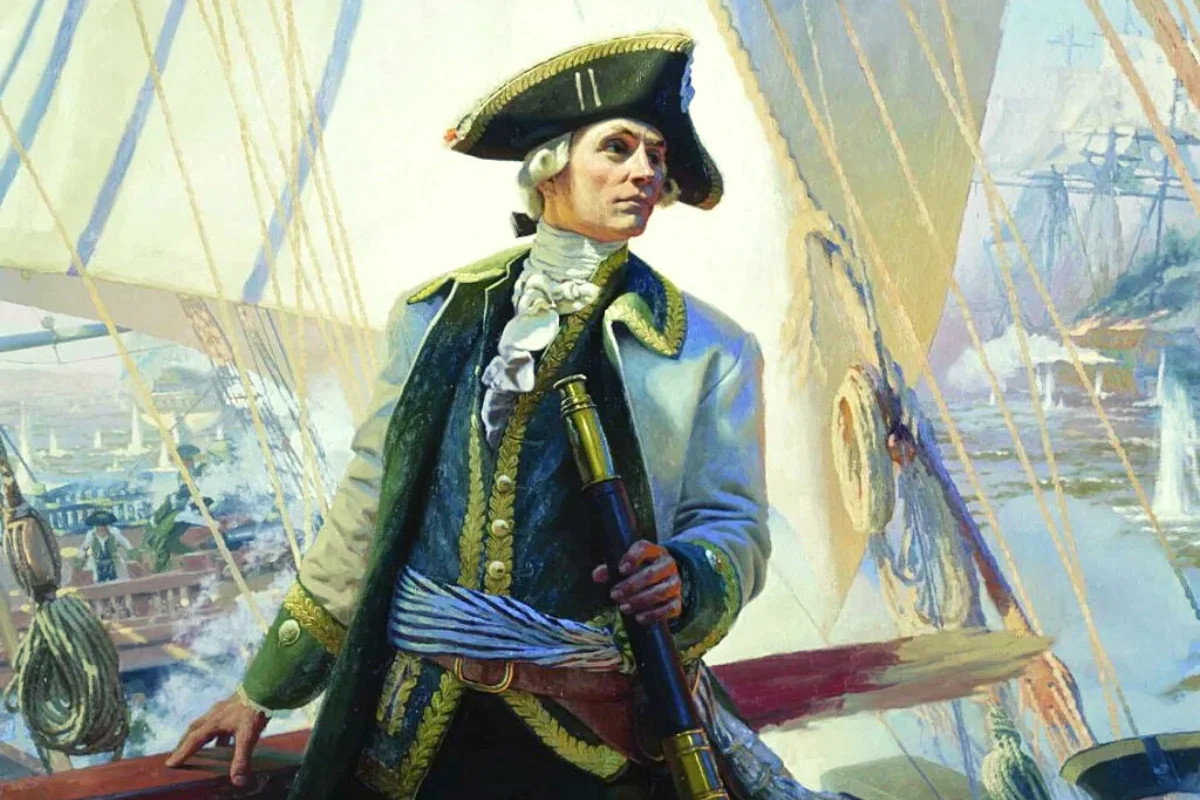
Fedor Fedorovich Ushakov is a great Russian naval commander. During his command of the fleet, he did not lose a single ship, and not a single sailor under his command was captured. Admiral Ushakov was a naval figure who brought glory to the then young Black Sea Fleet. The Turks respectfully called him “Usak Pasha.”
Admiral Fyodor Ushakov was one of the founders of the Black Sea Fleet, and since 1790 - its commander. Thanks to a number of major victories over the Turkish fleet, Russia was able to establish lasting peace in Crimea.
On February 15, 1761, 16-year-old Fyodor Ushakov was enrolled in the Naval Noble Cadet Corps, which on December 15, 1752 was transformed from the Naval Academy, founded by Peter the Great. The training was conducted by more than forty of the best teachers of the former Maritime Academy, headed by a professor. Supervision of training and education took place in three companies led by naval officers.
The “Regulations on the Naval Gentry Cadet Corps” of 1756 provided for the training of twenty-eight sciences, including various branches of mathematics, navigation, geography, artillery, history, politics, fencing, dancing, languages, and the basics of naval architecture. Therefore, there were no problems when in the future the sailors had to not only sail the seas and control the battle, but also conduct diplomatic negotiations.
On February 12, 1763, Ushakov, a successful student, was promoted to midshipman, and in April 1766, Fyodor Fedorovich Ushakov successfully passed the final exams, becoming one of the best graduates - fourth on the list of 58 students. On May 1, promotion to officer and swearing-in took place. In a solemn ceremony, on the parade ground of the Naval Corps, midshipman Fyodor Ushakov received the military rank of midshipman and made an oath promise “... to Her Imperial Majesty... to serve faithfully and unhypocritically and to obey in everything, not sparing his belly to the last drop of blood... In what may the Lord Almighty help me !
After graduating from the Naval Corps, midshipman Ushakov was sent to the Baltic Fleet for further service. In 1766–1767 he found himself on a long voyage from Kronstadt, around Scandinavia to Arkhangelsk, on a small transport ship, the Nargin. After wintering in the port of Arkhangelsk, the ship made a return passage to the Baltic.
The first trip for the young midshipman became a good school, and his excellent qualities as a sailor and officer were noticed by the command. He was soon transferred to the newly built battleship Three Hierarchs under the command of S.K. Greig, who was just introducing more advanced sailing weapons than those that had continued to be used in Russia since the times of Peter the Great.
In the campaigns of 1767 and 1768, Fyodor Ushakov on this ship, which was part of the Kronstadt squadron, took part in practical voyages, artillery exercises and the Imperial Review.
In 1768, war began with the Ottoman Empire. In addition to sending the Baltic Fleet to the Mediterranean Sea, the Russian command decided to form a military flotilla on the Don for operations in the Azov direction. Rear Admiral Alexei Nikolaevich Sinyavin, appointed commander of the flotilla, included Fyodor Ushakov among the officers sent to the “Don Expedition”, as he had proven himself well in the last campaign in the Baltic.
On January 27, 1769, Ushakov arrived in Voronezh, after which he was immediately appointed commander of ship No. 5, which was being completed at the Ikoretsk shipyard, 70 versts from the city. In April of the same year, Ushakov launched his ram into the water and took it to the lower reaches of the Don. July 30, 1769 F.F. Ushakov was awarded another military rank - lieutenant - one of the few graduates of 1766. An admiral who has not lost a single battle During the 1770 campaign he commanded the Hector (formerly N1). The following year, Lieutenant Ushakov, as an officer who knew the navigation conditions of the Don River well, was assigned to guide the frigate “First” from the Novokhoperskaya shipyard to the fortress of St. Dmitry of Rostov, which is at the exit to the Sea of Azov. Fyodor Ushakov completed this assignment successfully, which is why he was again sent to the upper reaches of the Don River to command four transports that delivered masts, rigging and timber to Taganrog for the construction of a frigate.
Shrouded in ice in the spring of 1772, the ships began to sink. Ushakov managed to remove the cargo from them, send them on carts to Taganrog, and then “with diligence and skill” lift the transports themselves. For this act, the vice-president of the Admiralty Collegium N.G. Chernyshev deigned to “keep in mind” Lieutenant Ushakov.
In the same year, Fedor Fedorovich, commanding the deck boat “Courier”, together with the frigate “First”, guarded the Crimean coast. During the campaign of 1773, while continuing to command the previous ship, he was attached to the squadron under Captain 2nd Rank I.G. Kinsbergen. In September, F. Ushakov was appointed commander of the “newly invented” 16-gun ship “Morea”, and then commander of the same type ship “Modon”, which was in the same squadron.
In 1774, the Kuchuk-Kainardzhi Peace Treaty was signed between Russia and Turkey, after which Lieutenant Fyodor Ushakov was transferred to the Baltic, to the St. Petersburg ship crew. For his distinction in the last war, on August 20, 1775, he was awarded the rank of captain-lieutenant.
On June 10, 1776, by order of the Vice-President of the Admiralty College I.G. Chernyshev, Fyodor Ushakov is appointed commander of the 26-gun frigate "St. Paul", which is at that moment in the Mediterranean Sea. In September, having made the transition to the Italian port of Livorno on the frigate "Northern Eagle", Fedor Fedorovich took command of the ship entrusted to him.
On January 22, 1777, “St. Paul” as part of a squadron of 5 frigates under the command of Captain 2nd Rank T.G. Kozlyaninov, dropped anchor in the Bosphorus Strait in the Constantinople roadstead. The Russian command wanted to build up its naval forces in the Black Sea by transferring frigates disguised as merchant ships from the Baltic. Not without the influence of French diplomacy, the Turks began to delay the issuance of permission to enter the Black Sea. The entry of Russian troops into Crimea and the change of khan led to political complications between Istanbul and St. Petersburg. Under these conditions, the impossibility of the passage of Russian frigates became obvious. On October 22, 1777, after standing for 9 months, Fyodor Ushakov gave the order to the “St. Paul” to weigh anchor and set course to enter the Mediterranean Sea.
The squadron returned to Kronstadt on May 24, 1779, i.e. only after 3 years, leaving 20 thousand miles behind. And, although the planned expedition was unsuccessful, the experience of a long voyage was gained.
During the summer campaign of 1779, Ushakov was appointed commander of the 50-gun ship St. George the Victorious. The positions of commander of battleships were held by officers with the rank of captain 1st rank and, less commonly, captain 2nd rank. Therefore, the appointment of Captain-Lieutenant Ushakov can be considered an exception, and this case itself clearly indicates the high authority of Fedor Fedorovich as an experienced commander and sailor.
At the end of the year, Ushakov was sent to Rybinsk and Tver to deliver a large shipment of timber to St. Petersburg, and upon his return, on August 12, 1780, he assumed the post of commander of the Imperial yacht. After 2 months, they again wanted to send him to harvest ship timber, but Fyodor Fedorovich Ushakov turned to the vice-president of the Admiralty Board, Count Chernyshev, with a request to cancel this order and assign him to a warship. The authorities agreed and Ushakov was transferred to Kronstadt, to the ship's crew.
On May 11, 1781, Lieutenant Commander Fyodor Ushakov again took command of the battleship "Victor", assigned to a long voyage to the Mediterranean Sea as part of Rear Admiral Ya.F. Sukhotin's squadron, consisting of 5 ships and 2 frigates.
On August 15, 1781, the squadron arrived in Livorno. In the same port, during the winter, Ushakov was promoted to the next rank - captain 2nd rank. Having completed the task of protecting Russian merchant shipping, Sukhotin’s squadron crossed the Strait of Gibraltar in May 1782 and dropped anchor on the Kronstadt roadstead on July 2.
On July 29, 1782, Fyodor Ushakov was appointed commander of the frigate “Provorny” for testing. This practical voyage, joint with the same type "St. Mark", was of great importance for domestic shipbuilding. The test results served as the basis for the introduction of copper plating on the underwater part of combat ships of the Russian fleet.
This same voyage ends a whole stage in the biography of Fedor Ushakov. In the future, his fate will be inextricably linked with the Black Sea Fleet, in which he served for almost 20 years, and, commanding it in campaigns and battles in the Black and Mediterranean Seas, gained worldwide fame as a Great Admiral.
Thanks to the active policy of Catherine II in the Black Sea basin, in 1783 the Crimean Peninsula became part of Russia. The military port of Sevastopol was founded on the shores of Akhtiarskaya Bay, and ships for the newly created Black Sea Fleet were already being built in Kherson and Rogozhsky farms. These events required the involvement of a large number of shipbuilders and sailors.
In June 1783, Fyodor Ushakov, among the 132 best officers, according to Admiral General Tsarevich Pavel, was selected to be sent to the Black Sea. In August of the same year, Ushakov, with 700 sailors and three thousand workers, arrived in Kherson to take the post of commander of a battleship under construction. At this time, a plague epidemic began in Kherson.
Due to the plague epidemic, all work was stopped. The garrison and working people were taken out into the open field. With a shortage of doctors, Fyodor Ushakov had to personally organize the fight against the plague epidemic in his crew. Showing extraordinary organizational skills, he succeeded in taking decisive measures already in November, i.e. after 2 months, eliminate all outbreaks of the epidemic in the barracks subordinate to him. In other crews, the plague raged until the summer. For this distinction, Ushakov was subsequently awarded the Order of St. Vladimir, IV degree.
In the summer of 1784, work on the construction of ships in Kherson resumed. The very next year, the 66-gun battleship St. Paul was launched. Under the command of Captain I rank Fyodor Ushakov (promoted to the rank on January 1, 1784), this ship arrived in Sevastopol in August 1785. Very soon, "St. Paul" began to be considered one of the best ships of the Sevastopol naval fleet. Ushakov was again noted as a diligent and attentive commander.
On May 16, 1787, Fyodor Ushakov was promoted to captain of brigadier rank, a rank that occupied an intermediate position between captain 1st rank and rear admiral. The fact that Fedor Ushakov was in the previous rank for only 2 years indicates his recognition by the command as an experienced officer capable of being a flagship. In the campaigns of 1787-88, Fyodor Ushakov acted as commander of the vanguard of the battle line of the Russian fleet.
On August 12, 1787, a new Russian-Turkish war began. The young Black Sea Fleet, founded in 1783, did not have a full staff strength. Thus, of the 12 battleships and 20 frigates provided for by the state in 1787, by the beginning of the war only
 3 ships of the line
 3 bombardment ships
 12 frigates.
The Turkish fleet in 1787 consisted of
 29 battleships
 39 frigates
with a significant number of combat ships of other classes. However, this did not bother the Commander-in-Chief of the Armed Forces of the Russian Empire in the south, Field Marshal General G.A. Potemkin. At his urgent demand to go to sea “...at least everyone would be lost,” Rear Admiral M.I. Voinovich on August 31, at the head of 3 battleships and 7 frigates, headed to the Rumenian shores with the goal of finding the Turkish fleet and arranging for it a “second Chesma.”
During the crossing, a Turkish merchant ship was captured by sea, and in sight of Varna, the Russian squadron found itself in a severe and prolonged storm, the consequences of which can be equated to defeat in a major battle. All the ships lost their masts and began to leak. The frigate "Crimea" went missing with its entire crew, and the battleship "Mary Magdalene" was taken to the Bosporus, where it was captured by the Turks.
“St. Paul,” under the command of Fyodor Ushakov, deprived of two masts, was carried across the entire Black Sea from west to east to the shores of Abkhazia. At a critical moment, Ushakov said: “My children! We’d rather die at sea than be in the hands of a barbarian.” And only thanks to the great personal experience of the commander and the high training of the crew, it was possible to save the ship and return to Sevastopol on September 21, 1787.
Having learned about this defeat, Potemkin was in despair for two days. “God beats, not the Turks,” he wrote to the Empress. The Sevastopol naval fleet did not take active action until the summer of 1788.
In early August 1787, the Turkish government presented an ultimatum to Russia, demanding the return of Crimea, recognition of Georgia as a vassal possession of the Turkish Sultan, and consent to inspect Russian merchant ships passing through the straits. The ultimatum was rejected, and on August 13 (24) Turkey declared war on Russia.
In the first general battle, captain of brigadier rank Feodor Ushakov was entrusted with leading the Russian squadron. The battle off the island of Fidonisi was the first naval battle of the Russian-Turkish war of 1787-1792, as well as the baptism of fire of the Sevastopol squadron.

On July 14, 1788, in the battle near the island of Fidonisi, Ushakov, with skillful maneuvers, with the support of three frigates, put the enemy to flight, causing him considerable damage. On July 19, 1790, Fyodor Fedorovich defeated the Turkish squadron in the Kerch Strait (at Cape Takly), preventing it from landing troops on the Crimean coast. Having violated all the canons of classical tactics, creating a special reserve group, Ushakov won a landslide victory.

On August 11, 1791, near Cape Kaliakria (northern Bulgaria), Ushakov won a battle that became legendary and quickly defeated the Turkish fleet, which was significantly superior to his, at anchor. This defeat opened a sea route to the Turkish capital Istanbul. The Sultan was forced to conclude the Peace of Jassy with Russia on terms favorable to us. Ushakov was awarded the Order of St. George of the 4th and 3rd degrees and of St. Alexander Nevsky.
Ushakov successfully led the Mediterranean campaign of Russian ships during the war against France.
In August 2001, Admiral Ushakov was canonized as a righteous saint and became the heavenly patron of Russian military sailors.
© Copyright 2026 - History and myths