We work non-stop
Read more

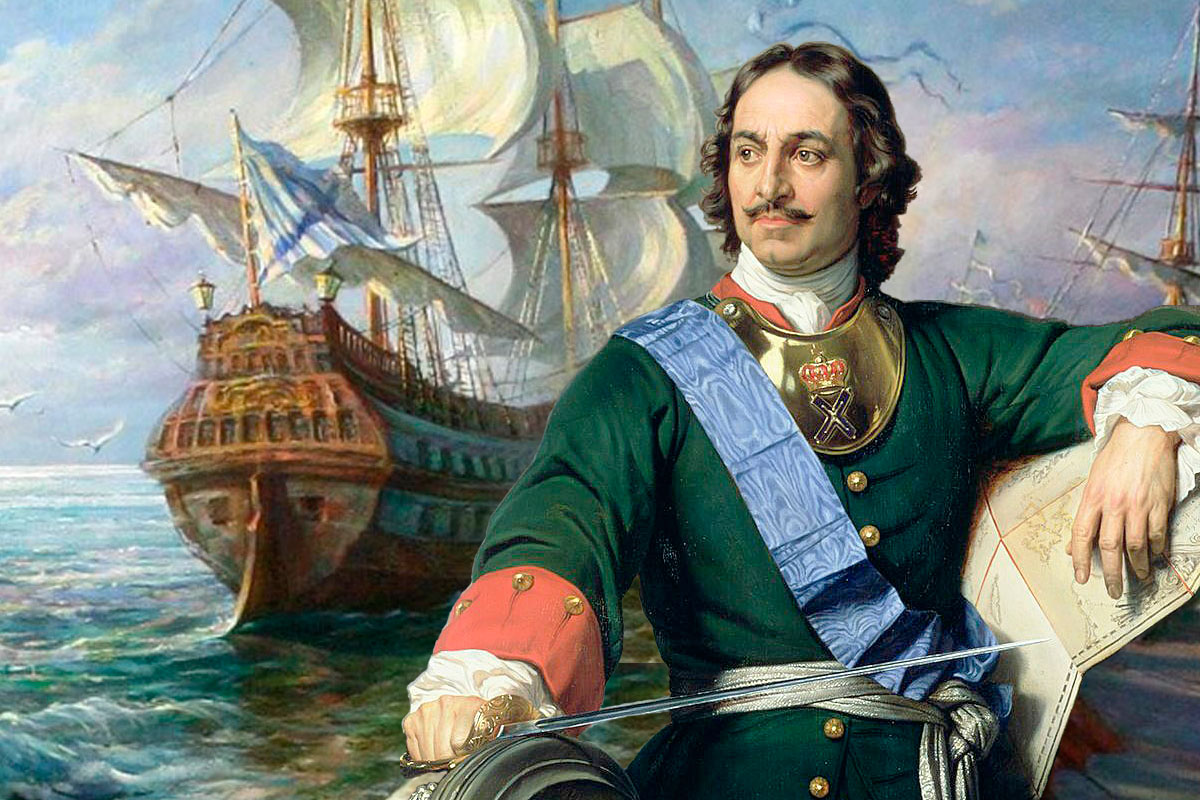
Peter I ascended the throne in 1682 as the last Tsar of all Rus', and left it in 1725 as the first Russian Emperor. During 29 years of autocratic rule, he radically changed the international, political, economic, social and cultural image of Russia. Having laid the foundations of a modern state, created an army, navy, industry, expanded its borders and turned Russia into a great empire.
Foreign policy, borrowing European culture and traditions allowed to raise the life of ordinary Russians and nobles to a new level. Culture and education became one of the main priorities in the development of the state.
In 1699, Peter I decided to create a professional army on a regular basis - instead of the noble militia of the times of Ivan III, the Streltsy of Ivan the Terrible, the regiments of the "new order" of Mikhail Fedorovich. And in 1705 he introduced conscription for all classes: peasant households put up soldier-recruits for lifelong military service, one person from 20, 25 or 50 households. The core of the army was the Life Guards Preobrazhensky and Semenovsky regiments. By 1725, 53 recruitment sets were made - more than 284 thousand people were taken into service. A uniform was invented for the soldiers: the infantry wore green caftans and black hats, the cavalry - blue caftans and black hats. In 1711, orchestras were organized at each military unit. In 1716, the rights and responsibilities of employees were approved - "Military Land Charter". According to it, a military oath and punishments for crimes were introduced - up to the death penalty. Although there was also a system of rewards: in 1698, Peter I established the first highest award in Russian history - the Order of St. Andrew the First-Called, and after each major battle, officers and soldiers were awarded commemorative gold and silver medals.
In 1693, the tsar built the first seagoing ship, "Saint Paul", in the port of Arkhangelsk - it went to sea under a white-blue-red flag with a golden double-headed eagle in the center. In 1705, this cloth became the Russian merchant flag, and in 1991 - the state symbol of Russia.
The birthday of the Russian Navy was October 30, 1696. Then the Boyar Duma supported the tsar's idea to create a regular fleet on the Sea of Azov. Peter I personally built ships in the Voronezh forests on the Don. And the official flag of the fleet in 1699 became a cloth with the St. Andrew's Cross.
With the beginning of the Northern War, Peter I founded the Baltic Fleet - in 1703, its first sailing frigate "Standart" and Fort Kronstadt were built. In 1714, the Baltic squadron defeated the Swedes in the Battle of Cape Gangut - this was the first victory of the Russian fleet in history.
At first, officers went to study in England, Holland and Venice, and in 1715, the St. Petersburg Naval Academy was established. Its graduates were called "midshipmen", from the French garde-marine - "marine guard". In 1720-1722, the "Naval Charter" and "Admiralty Regulations" were written for naval sailors. All ranks from sailor to admiral were to defend the homeland "with all diligence and zeal." And foreigners could serve only on the condition "that they remain here until death."
In 1697–1698, Peter I traveled around Europe - incognito as part of the Grand Embassy, he toured the cities of Prussia, Holland, England, and the Habsburg Empire. For a year and a half of his "great apprenticeship," he studied the sciences and arts of Europe and absorbed local traditions. When he returned, he himself began to trim the beards of the boyars, cut off the long sleeves and hems of their clothes. He ordered them to wear wigs and European clothing: German clothes on weekdays, and French clothes on holidays. In 1700, mannequins with clothing samples were even displayed at the gates of the Kremlin.
During his second trip in 1716–1717, Peter I visited Denmark, Holland, France, and Prussia. In 1717, the first etiquette textbook in Russia, "The Honest Mirror of Youth," was published. And seven years later, the tsar banned forced marriages.
In 1718, Peter I established Assemblies - social evenings in which women participated equally with men. They danced the polonaise, minuet and contradance, discussed the news, played cards and chess, drank coffee and elite alcohol. Peter I drew up a special regulation for the nobility in 10 points - so as not to stand "like a block in the middle of the fun." For ordinary citizens, he organized festivities on the occasion of military victories - ceremonial processions with models of fortresses and ships, "fire amusements" and treats.
The Tsar not only studied abroad himself, but also sent students there with a pension — tuition fees. For example, the painter Ivan Nikitin studied in Italy “on a state pension,” and another pensioner, Andrei Matveyev, was paid for courses in Holland and Belgium. Later, they created the first canvases of the new Russian painting — not parsunas, but secular portraits.
In December 1699, Peter I introduced a new system of chronology and calendar. Previously, the year began on September 1, and was counted “from the Creation of the World” — 5508 years behind Europe. By decree of Peter, the new year began on January 1, 1700 AD; the old year, 7208, lasted only four months. They celebrated it on a grand scale: the streets of Moscow were decorated with “decorations of pine, spruce and juniper trees and branches,” and on Red Square until January 7, regiments of soldiers fired 200 cannons and launched fireworks.
On May 27, 1703, Peter I founded “Saint Petersburg” on the lands recaptured from the Swedes. It began with the Peter and Paul Fortress on Hare Island in the Neva Delta, and in 1712 it had already become the capital of the country - the city that the Italian traveler Francesco Algarotti called “the window through which Russia looks at Europe,” and Alexander Pushkin picked up on in “The Bronze Horseman”: “Nature is destined here for us / To cut a window to Europe, / To stand with a firm foot by the sea.”
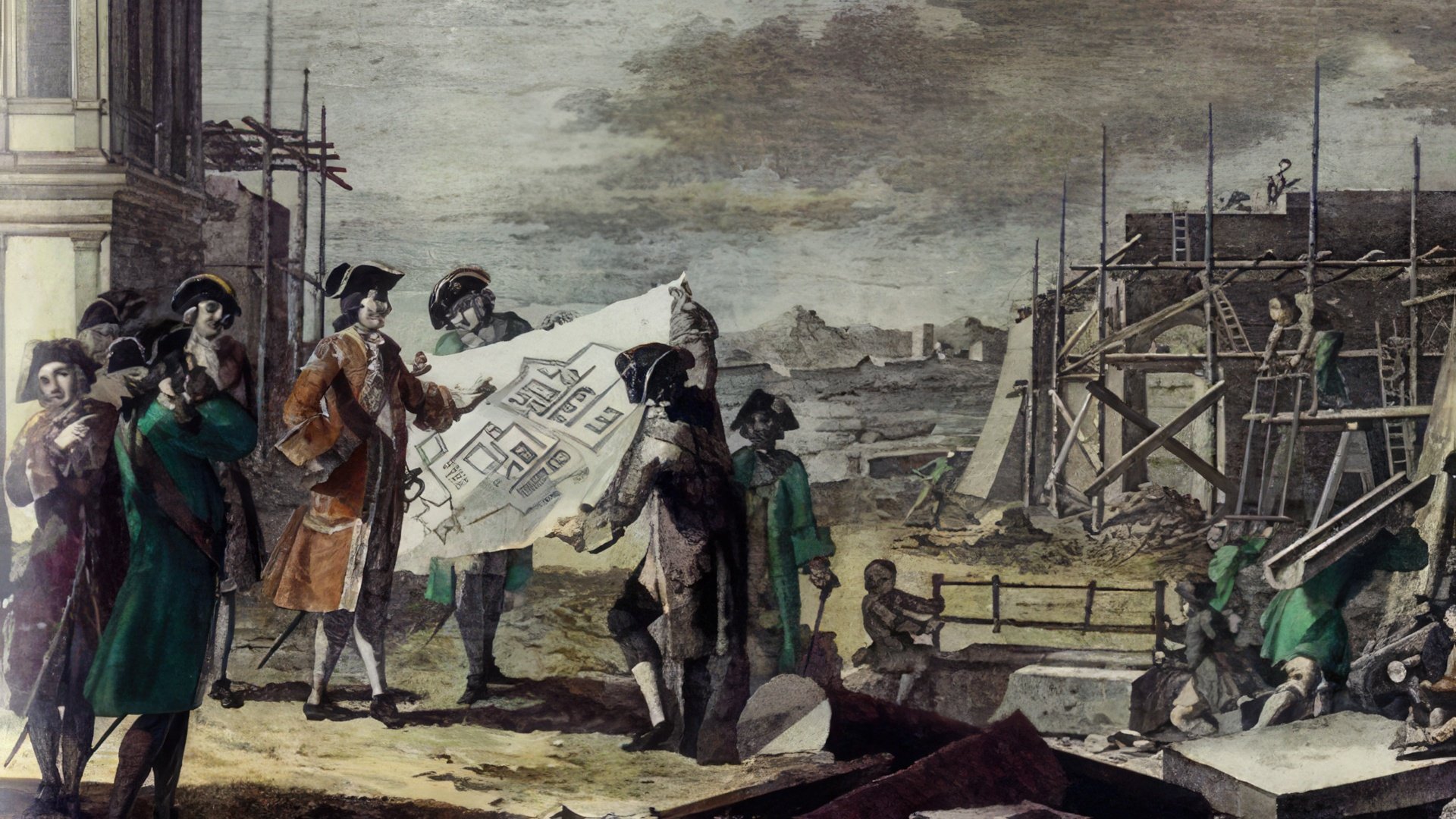
For the first time in Russia, the city was not built spontaneously, but in a regular layout: straight streets formed geometrically verified blocks, and houses were erected in them according to the model. The Tsar studied European journals, theoretical treatises of the architects Vitruvius and Andrea Palladio, and his ideas were embodied by foreign court architects - Jean-Baptiste Le Blond and Domenico Trezzini.
Architectural innovations under Peter I were manifested not only in examples of "Petrine Baroque" in St. Petersburg, but also in Moscow - its monumental towers, the Kremlin Arsenal and stone bridges across rivers.
In 1708, Peter I began the first regional reform - he divided the entire country into districts and provinces. There were eight governorates: St. Petersburg, Arkhangelsk, Smolensk, Kiev, Moscow, Kazan, Azov, Siberian. In 1713, three more were added: Nizhny Novgorod, Astrakhan, Riga. During the second reform, 50 provinces were allocated within the governorates according to the Swedish model, and districts were introduced instead of counties. Thus, it became possible to govern the country vertically: tsar - governor - voivode - zemstvo commissioner.
Peter I made the administrative system less cumbersome. Instead of the Boyar Duma, he created the Governing Senate, which developed new laws, monitored finances and justice in the country. Senators began to take an oath for the first time, promising to "honestly and purely, not flatteringly, but more zealously fulfill their title," and their work was supervised by the prosecutor general, "the eye of the sovereign." In 1717–1721, instead of 44 orders – central government bodies – Peter I created 11 colleges, which Alexander I would replace with ministries 85 years later. The first to appear were the College of Foreign Affairs, the Military and the Admiralty – they were in charge of diplomacy, army and navy affairs. And the Spiritual College later became the Holy Synod, which managed church affairs.
In January 1714, numeral schools were opened in the provinces – children of all classes, except serfs, could study literacy and arithmetic there. The teachers were graduates of the School of Mathematical and Navigational Sciences – the first secular and military educational institution in Russia. And the children studied using domestic textbooks: “Arithmetic” by Leonty Magnitsky and “ABC” by Fyodor Polikarpov-Orlov. Peter I was especially strict with the children of nobles - in December 1714 he even issued a decree forbidding "ignoramuses" from marrying until they had mastered "numbers and geometry."
Peter I gave a start to professional education in the country: educational institutions began to open, after which one could immediately work. For example, as an interpreter - in the 1700s, a school for translators opened at the Ambassadorial Office. Future doctors were trained at the first hospital school in Moscow, and miners - at the mining school, which opened in 1716 at the Olonetsky plants in Karelia.
The Tsar strongly recommended that his subjects educate themselves. For example, watch plays - in 1702, a public theater with German, French and Spanish plays opened on Red Square. Read more - from the same year, the first Russian printed newspaper "Vedomosti" began to be published, and six years later, annual calendars with dream interpretations and notes on astronomy and agronomy. In 1708, a civil printed font was introduced to replace the hard-to-read Church Slavonic.
But most importantly, Peter I showed that education is the key to a future career. In 1722, Peter I published the Table of Ranks, which included 14 levels of military, civil and court ranks. Now positions were occupied not by the nobility of the family, but by personal abilities and knowledge - any Russian could become a nobleman with special persistence.
In 1714, Peter I gathered all his collections of books, "naturalia" and curiosities in one place - in the People's Chambers of the Summer Palace in St. Petersburg. And he invited the Scotsman Robert Areskin and the Alsatian Johann Schumacher to systematize them. Even during the years of the Great Embassy, the tsar was amazed at the scale of collecting in Europe. He dreamed of decorating his treasury in the likeness of the Kunstkamera of the Saxon Elector Augustus II the Strong. And he even called the "cabinet of antiquities" exactly the same.
Four years later, the collection, together with Peter I's personal library, was moved to a separate building, the Kikin Chambers, and in 1719, it was first shown to visitors. Among the exhibits were "curious things" bought by Peter I in Amsterdam: a collection of reptiles from South America, collected by the pharmacist Albert Seba, stuffed animals and alcohol preparations with human organs, made by the anatomist Frederik Ruysch. The brushes of the entomologist Maria Sibylla Merian belonged to the watercolors with insects and plants of Surinam.
Guests viewed the exhibits for free, and if they came in a group, then on the personal instructions of Peter I, they were treated to coffee or vodka. At the same time, a special building for the Kunstkamera began to be built on the Spit of Vasilievsky Island - in 1728, a large museum was opened there.
Peter I spent 24 of the 29 years of his autocratic reign in wars. Their success depended entirely on the development of industry. At the beginning of the 18th century, the tsar began to build "iron factories" on a large scale, such as Tula and Sestroretsk, and metallurgical enterprises, Nevyansk and Kamensk plants in the Urals. Russia stopped buying guns, cannons, cannonballs, anchors abroad and became the third largest producer of ferrous metals in Europe.
New iron ore deposits were discovered not only by civil servants, but also by "private individuals" - this is how the industrial dynasties of the Demidovs and Stroganovs arose. At the same time, they began to think for the first time about preserving the landscape: permits for the construction of factories were issued only by the Berg Collegium. Miners had to send interesting fossil finds to the Kunstkamera. And the first laws on environmental protection appeared: in 1703, it was forbidden to cut down trees within 50 miles from the banks of large and 20 miles from small rivers.
On February 8, 1724, Peter I founded the Academy of Sciences in Russia - today it is the Day of Russian Science. By that time, the monarch was already a member of the French Academy and knew how scientific communities in Europe were organized. Therefore, he decided to unite his personal library and the Kunstkamera under the Academy.
Peter I wanted the members of the Academy to "make inventions", to give "reports and advice" and to systematize scientific knowledge in Russia - by that time there was a lot of it. For example, by 1699 Vladimir Atlasov had compiled a description of Kamchatka, in 1719 Mikhail Serdyukov had come up with a project for the first artificial water system in Russia, and by 1722 Lev Izmailov's embassy to China had been completed, from where he had brought back ethnographic finds, models of ships and ropes, fireworks and porcelain.
The Emperor appointed his personal physician Lavrenty Blumentrost as the president of the Russian Academy, and invited foreigners to Russia to work: mathematician Christian Goldbach, physicist Georg Bilfinger, physiologist Daniel Bernoulli, astronomer Joseph-Nicolas Delisle, historian Gottlieb Bayer and others. However, Peter I did not live to see the first meeting - in November 1725.
On November 2, 1721, Peter I assumed the title of Russian Emperor. The Senate proposed the title of "Father of the Fatherland, Peter the Great, Emperor of All Russia" in honor of the victory over the Swedes in the Northern War. Peter the Great stood on a par with European rulers, who, however, did not immediately accept his new status - Prussia and Holland immediately approved it, and England and France, for example, did so only in the 1740s.
Peter I entered Russian and world history as a talented military leader and naval commander. At the age of 24, he went to war against the Ottoman Empire and took Azov: Russia for the first time received access to the southern seas. At the age of 25, he conducted diplomatic negotiations with European politicians during the Great Embassy - and approached the beginning of his main war with the Northern Union, which included Poland, Saxony and Denmark.
Peter I began the Northern War against the Swedish King Charles XII in 1700 with the "Narva Confusion", when the Russian army was routed near the city of Narva. However, the Battle of Poltava in 1708 and the naval Battle of Gangut in 1714 (today the Days of Military Glory of Russia) showed that Russia was a serious opponent. The war ended in 1721 with the Treaty of Nystad - the country received access to the Baltic Sea with a strip of coast from Vyborg to Riga.
And during the Persian campaign in the next three years, the Russian Empire gained a foothold on the western coast of the Caspian Sea - it received the Iranian provinces with the cities of Derbent, Baku and Rasht.
As a result, Russia became one of the great powers, without whose participation no military campaign or diplomatic conference could take place in Europe.
© Copyright 2026 - History and myths